Inside Attero’s Push to Build a Technology-Led Recycling Ecosystem
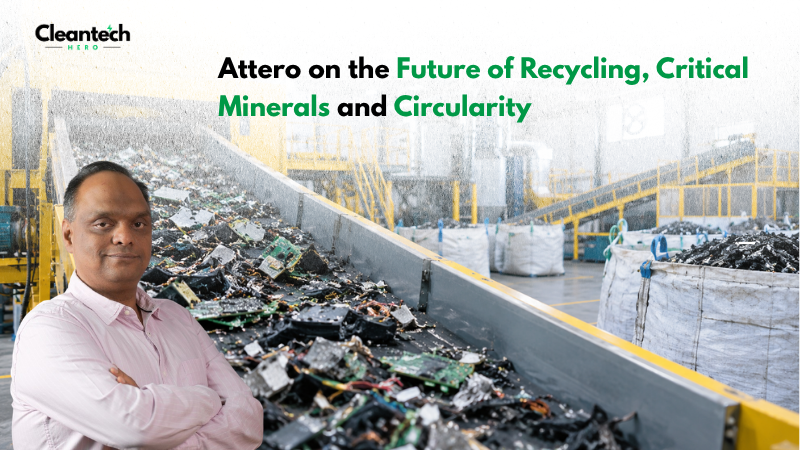
This interview with Nitin Gupta, CEO and Co-founder of Attero, explores the company’s technology-led approach to recycling, critical mineral recovery, e-waste collection, and digital scrap sourcing. Gupta also discusses second-life batteries, black mass exports, domestic refining, and recycling’s role in reducing India’s critical mineral import dependence.
1. Attero has been in this business since 2008, well before EPR rules and the critical minerals conversation brought recycling into the spotlight. What’s changed most about the industry in the last two or three years — and what hasn’t changed as much as you’d hoped?
The biggest change is that recycling is no longer seen simply as waste management. It is increasingly being recognised as a strategic industry linked to resource security, manufacturing and the energy transition. India generated around 5 million tonnes of e-waste in FY24, almost twice the level of FY14, with a recoverable economic value of around $20 billion.
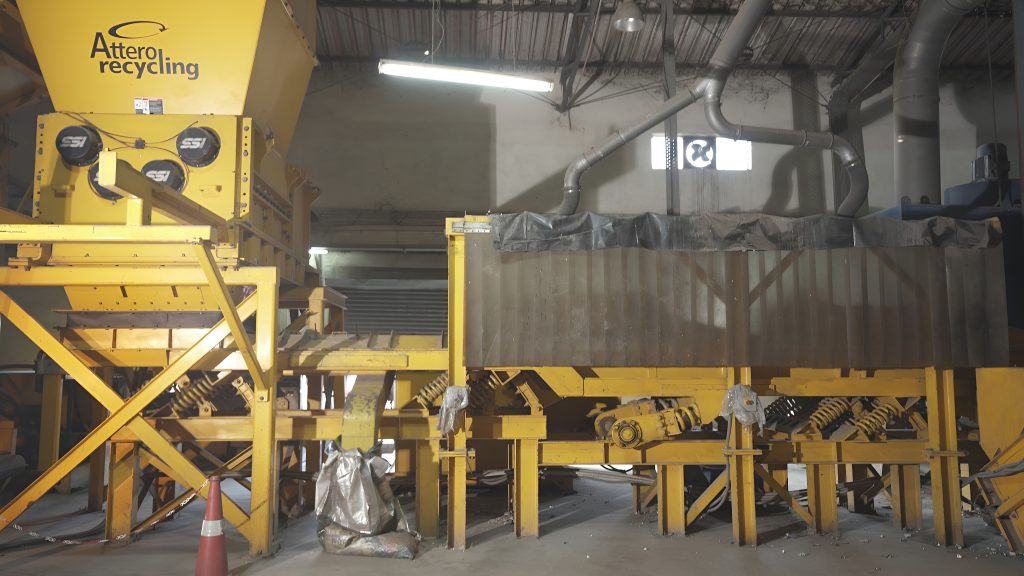
Technology has also moved rapidly. Attero has built proprietary processes for recovering more than 20 critical minerals, supported by more than 50 global patents and over 200 patent filings across markets. We are also using technology to address one of the industry’s longstanding challenges: collection and sourcing. Through Selsmart, Attero is bringing technology into consumer collection and take-back, while MetalMandi is creating a more organised and transparent digital channel for sourcing and trading scrap. Together, these platforms are helping bring greater visibility, traceability and organisation to the front end of the recycling value chain.
The opportunity now is to connect these technology-led collection and sourcing systems with advanced processing, so that the same level of organisation that exists within the recycling plant extends all the way to the point where material enters the formal recycling chain.
2. Where does your raw material actually come from? Could you break down your major supplier types and roughly what share of your volume each one contributes?
The industry largely sources material through aggregators, but Attero has taken a different approach by using technology to organise the collection and sourcing layer. Selsmart is our consumer-facing take-back platform, enabling individuals and businesses to dispose of e-waste through a formal, traceable channel. MetalMandi, our digital marketplace for scrap, connects suppliers and buyers and brings greater transparency to material sourcing, pricing and transactions.
Today, around 85% of our material comes through MetalMandi, 8% through Selsmart and 5% directly from OEMs. This means virtually all of Attero’s collections are routed through transparent and traceable digital channels. The objective is to bring greater visibility and accountability to the front end of recycling, while creating a more organised supply chain for the materials we process.
3. How do commercial terms differ across these supplier categories — say, an OEM tie-up versus an aggregator versus the open scrap market?
Commercial terms are ultimately determined by market forces. They vary depending on the quality and composition of the material, volumes, consistency of supply, logistics and prevailing commodity prices. An OEM relationship may provide greater predictability and traceability, while open-market transactions are more directly exposed to daily price movements. At the end of the day, the economics have to work for the entire value chain.
4. Is consistency of supply — both in volume and in price — a serious operational challenge for you, or is it a non-issue?
It is something we manage as an inherent feature of the business, rather than an unusual operational problem. Both volumes and prices are determined by market forces. Our approach is therefore to diversify sourcing and improve visibility on availability, quality and pricing. Having multiple sourcing channels, including digital platforms, makes the business considerably more resilient than relying on any one channel.
5. Selsmart enables consumers to sell old electronics through a fixed-price, doorstep pickup model. How do you see Selsmart changing consumer behaviour around old electronics, particularly when it comes to moving e-waste from informal channels into more organised and responsible recycling streams?
The biggest barrier is often convenience and trust. People may know they should dispose of electronics responsibly, but the informal market has historically been easier to access. Selsmart addresses that by making the formal route simple, with doorstep collection, transparent pricing, digital payments, secure data handling and traceability.
The objective is straightforward: make responsible disposal at least as convenient as selling to an informal buyer. Selsmart has crossed 30,000 monthly orders across more than 25 cities, demonstrating the potential for organised collection when the consumer experience is simple.
6. MetalMandi is your digital scrap trading platform — sellers list scrap, see live AI-driven prices, and get doorstep pickup. How do you see MetalMandi helping formalise the scrap ecosystem and create greater efficiency and transparency for sellers, dealers and businesses?
The biggest weakness in the scrap ecosystem has traditionally been the lack of reliable information about price, quality, availability and demand. MetalMandi brings these elements onto a common digital platform. AI-driven price discovery, image-based quality assessment and supply visibility allow sellers to understand the value of their material and buyers to make more informed procurement decisions.
This is also an extension of what we have been building at Attero for years. Recycling at scale requires proprietary technology inside the plant, but it also requires technology outside the plant to create a reliable flow of material. MetalMandi is part of that larger technology stack, helping bring greater transparency and traceability to a highly fragmented market.
7. What’s the current transaction scale on MetalMandi and Selsmart, and where do you expect both to be in the next couple of years?
MetalMandi has scaled rapidly since its launch in 2025. It has crossed two lakh downloads, has more than 1.1 lakh registered users and over 50,000 monthly active users. The platform currently facilitates around 15,000 tonnes of scrap procurement a month across more than 28 states and 100-plus cities, and Attero is targeting around ₹10,000 crore of annual revenue from the platform over the next five years.
Selsmart registers more than 30,000 monthly orders and has a ₹100-crore revenue run-rate, with a stated target of 1.5 lakh monthly orders and a ₹500-crore revenue run-rate. The broader objective for both platforms is to build scale while bringing more of India’s fragmented scrap and e-waste flows into organised channels.
8. Second-life use — repurposing batteries with usable capacity left into stationary storage instead of recycling them immediately — does that compete with recyclers for feedstock, or are the two complementary?
They are complementary. A battery that is no longer suitable for automotive use may still retain 70-80% of its original capacity and can potentially be used for stationary storage. The key is to assess its chemistry, degradation, thermal stability and safety before giving it a second life. Once it reaches the end of that useful life, recycling becomes the next step.
The important point is that second life should extend the useful life of the battery without delaying material recovery indefinitely. The most efficient model is first life, second life where technically and economically viable, and then recovery of the materials through recycling.
9. There’s an active debate on curbing black mass exports. Domestic R3/R4 refiners say they can absorb all of it, while R2 dismantlers argue that overseas buyers pay better and recover more. Where do you stand, and what would a well-designed export policy actually look like?
Exporting black mass is counterintuitive to India’s objective of building critical-mineral resilience. Black mass is a valuable secondary source of lithium, cobalt, nickel and other critical materials, and allowing large volumes of it to leave the country means exporting both the material and the opportunity to recover those minerals domestically.
The policy objective should therefore be to retain black mass in India and build sufficient domestic refining capacity to process it competitively. At the same time, the economics for R2 dismantlers cannot be ignored. If domestic offtake, pricing or refining capacity is inadequate, an abrupt export restriction could put pressure on the formal recycling chain and potentially push material towards informal channels.
A well-designed policy should therefore combine a clear transition towards domestic processing with verified domestic refining capacity, transparent price and offtake benchmarks, quality and traceability standards, capacity audits and EPR-linked tracking. Export duties can also be used during the transition to progressively favour domestic processing without disrupting the supply chain overnight.
10. India has negligible domestic reserves of lithium, cobalt, or rare earths, and China dominates refining. How much of that import dependence can recycling realistically address over the next decade — and how much is honestly beyond what recycling alone can solve?
Recycling can make a meaningful contribution to reducing India’s import dependence, but the impact will vary considerably by metal. Based on Attero’s assessment, recycling could meet around 20% of India’s copper and aluminium demand, while the potential rises to around 55% for lithium carbonate and cobalt and as high as 70% for rare earth metals.
The opportunity will increase as the installed base of electronics, batteries and EVs grows and more of these products enter the recycling stream. However, recycling has a time lag because today’s products become tomorrow’s feedstock. It therefore cannot replace primary mining, international resource partnerships or domestic refining capacity. India’s long-term critical mineral strategy will need to combine domestic resources, diversified global sourcing and urban mining, with recycling playing a much larger role in reducing import dependence.
Also Read: Battery Energy Storage in India: Geon’s Strategy, Localization, and Policy Outlook
Subscribe to our Newsletter
Subscribe today for free and stay on top of latest developments in Cleantech domain.