Delhi Master Plan 2047: Clean Mobility, Renewable Energy and Waste Management Provisions
The Master Plan for Delhi 2047 (MPD-2047) outlines provisions covering clean mobility, renewable energy, energy efficiency, waste processing, water reuse and related infrastructure. The plan includes measures for electric and hydrogen mobility, charging and refuelling infrastructure, renewable-energy use, Bio-CNG/CBG and waste-to-energy plants, recycling and green-building requirements.
Clean mobility: MPD-2047 provides for the adoption of electric, hydrogen and other low-emission transport technologies, along with charging and refuelling infrastructure. The plan also promotes public transport, walking and cycling as preferred modes of mobility.
EV charging: Public buildings with parking capacity of more than 100 vehicles are to earmark 5% of their parking area for Electric Vehicle Charging Stations (EVCS). The plan also calls for land parcels to be identified for public EV charging and battery-swapping infrastructure.
Green-fuel infrastructure: Charging stations for electric vehicles and infrastructure for other green fuels can be developed as standalone facilities or integrated with existing fuel stations, subject to feasibility.
Solar and energy efficiency: Projects under Transit-Oriented Development and High Density Corridor zones are required to comply with provisions covering solar energy utilisation, energy efficiency, water conservation, zero-discharge, dual piping and waste management.
Renewable energy: Increasing the share of renewable energy in total energy use has been included as a Key Performance Indicator under MPD-2047.
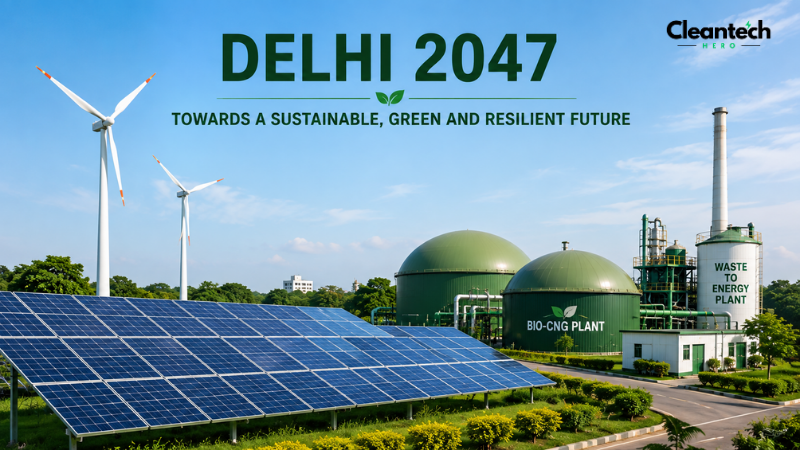
Bio-CNG/CBG and waste-to-energy: The plan proposes four Bio-CNG/CBG plants with a capacity of 500 TPD eachand two Waste-to-Energy plants with a combined capacity of 5,000 TPD. It also includes two C&D waste-processing plants with a combined capacity of 2,000 TPD.
Waste processing and recycling: The plan provides for local processing of wet waste through composting, bio-methanation and biogas plants, along with material recovery facilities for dry waste. It sets a target of processing 100% of green waste locally and increasing recyclable waste sent to recycling centres or industry from 20% to 100%, with an increase of 10 percentage points per year.
Water reuse: Increasing the reuse of treated wastewater is another KPI under the plan. Green-building provisions also include water conservation, zero-discharge and dual-piping systems.
Power infrastructure: Delhi’s peak power demand is projected to reach approximately 25,500 MW by 2047. The transmission plan proposes 2 substations at 765 kV, 10 at 400 kV and 37 at 220 kV under MPD-2047.
Also Read: IBMA proposes changes to CPCB’s EC guidelines on battery waste management
Subscribe to our Newsletter
Subscribe today for free and stay on top of latest developments in Cleantech domain.