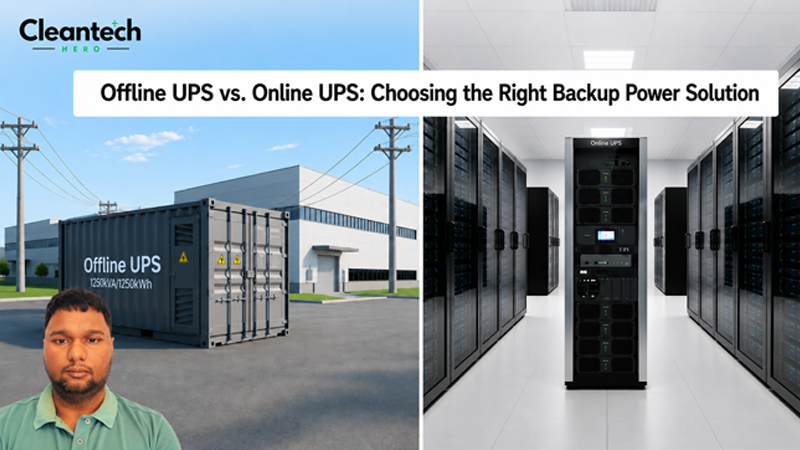
Offline UPS vs. Online UPS: Understanding Switchover Time, Backup Duration, and Applications
Offline UPS (Regular ESS)
As the name suggests is not always online and hence it has a switch over time during power outages. The power supply switching between grid to UPS results in exposing the load to electrical noises and surges. Hence, offline UPS is not recommended for very sensitive devices. However, offline UPS has a switch over period of less than 20ms and it is enough for most non-critical equipment to keep them continuously powered on. A typical example of this is (refer below image) an energy storage system with an inverter supporting off-grid mode and STS (static transfer switch) to keep the switch over time below 20ms, typically being 16-18ms. A switchover time over 30ms can trip the application and can activate (SLA) service-level-agreement penalties for the service provider.
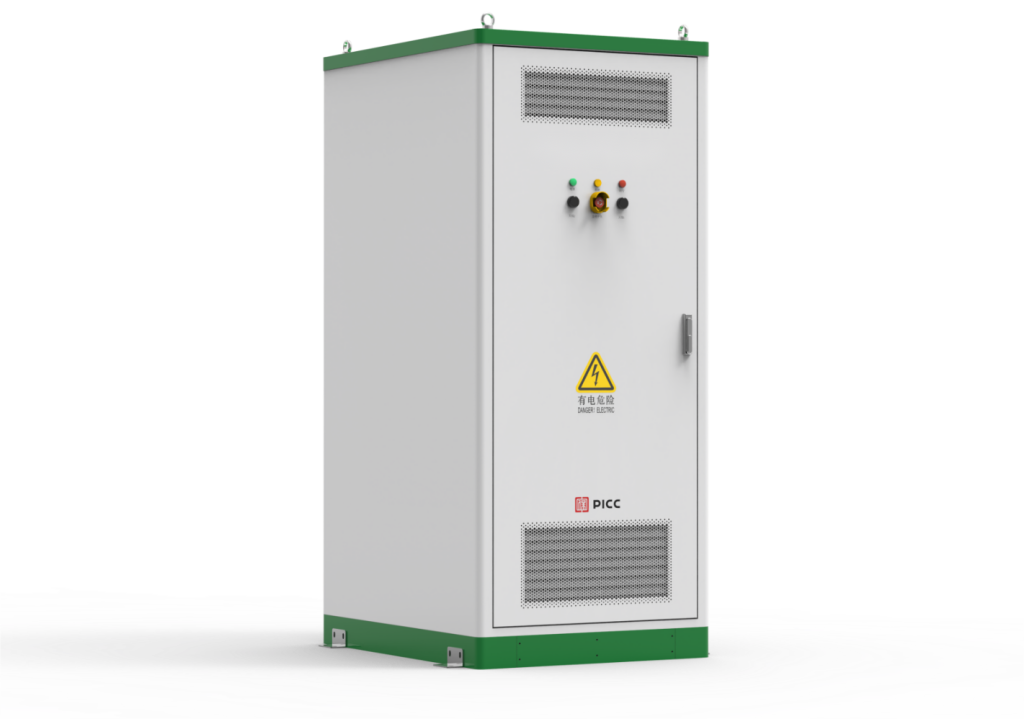
All-in-one 125kW/261kWh ESS for Commercial & Industrial uses.
Offline UPS are typically utilized for longer back up hours and typically may or may not have diesel generator as a backup for extended power outage situations. The above system can power 125kW loads for approximately 2 hours and can provide longer hours for lower than 125kW power requirements.
Online UPS
As the name suggests is always online and all the grid power is sent via UPS to the loads. It is connected 100% of the time to the grid and load ensuring 0ms switch over time during a power outage. It is used for very sensitive devices such as medical equipment, server applications.
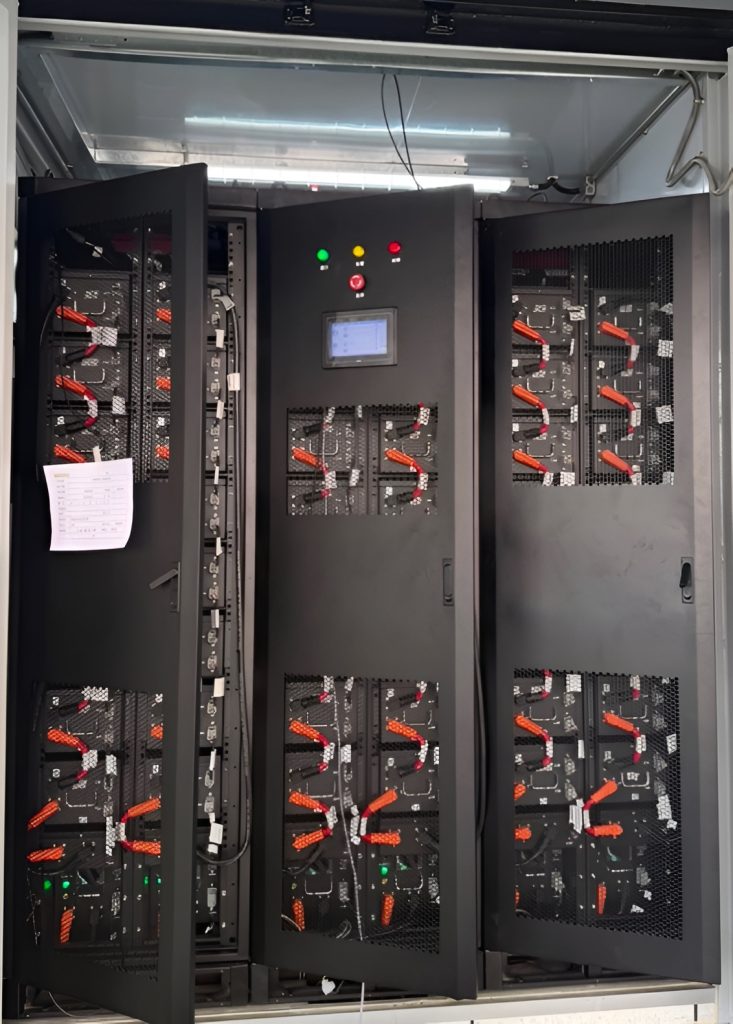
Online UPS battery system (512V) for data centers.
Online UPS systems are designed for shorter backup times—typically 10 to 30 minutes. They utilize a diesel generator as a backup during extended power outages. These facilities use the UPS for a very short duration during an outage until the diesel generator power kicks in. In fact, some facilities maintain up to 4 days’ worth of diesel backup stock on-site.
Certain critical equipment manufacturers mandate the use of an online UPS; failing to do so may void the warranty on their equipment. An online UPS is a more expensive solution and should only be considered for applications that require a 0 ms switchover time. For applications that can tolerate a minimal switchover time without tripping, an offline UPS is a suitable and highly affordable solution.
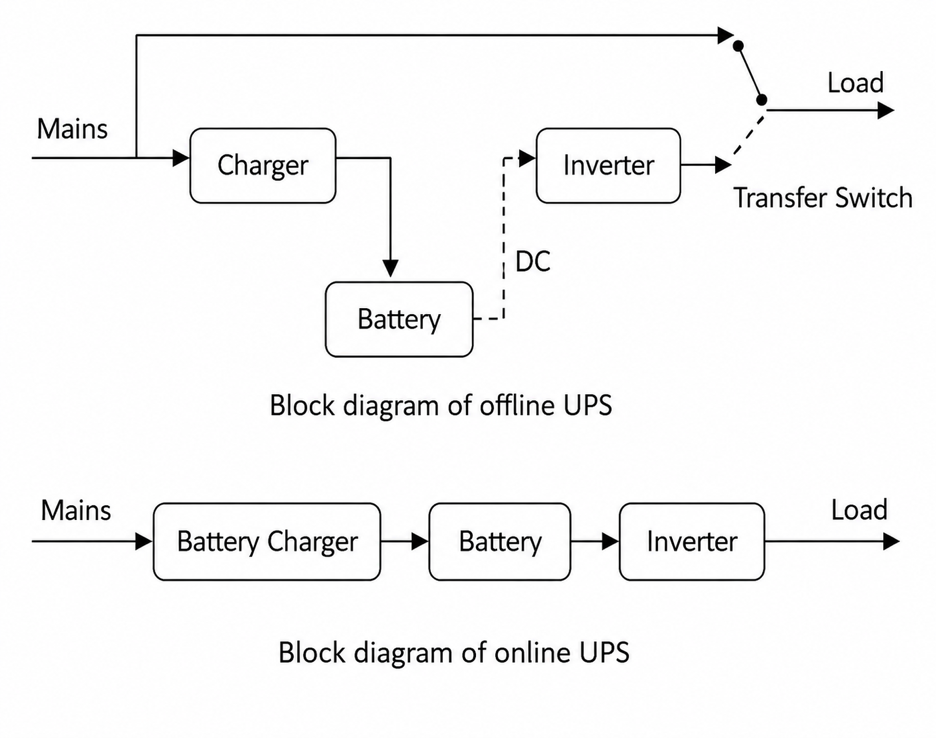
Block diagram of offline UPS vs. online UPS architecture.
An online UPS solution utilizes a more expensive inverter and battery, and its typical lifespan is shorter than that of an offline UPS inverter and battery system. Both systems serve the same primary purpose—providing backup power—but their target use cases are completely different.
This article is authored by Rahul Bolini, a seasoned technical expert in Lithium-ion cells, EV batteries, and BESS, with over 11 years of experience in manufacturing facility setup, process development, and project execution. Based in Bangalore and Shenzhen, he provides technical leadership and end-to-end project support to companies across global markets. He can be reached at +91-7204957389 or bollinienergy@gmail.com.
Also Read: BESS: Replacing Diesel Gensets with Green Power Backup
Subscribe to our Newsletter
Subscribe today for free and stay on top of latest developments in Cleantech domain.